Home Services Marketing » Blog » HVAC Industry Trends 2026: What’s Driving Growth & Revenue?
HVAC Industry Trends 2026: What’s Driving Growth & Revenue?
Chan K
-
Post DateMay 22, 2026
-
Reading Time19 minutes read
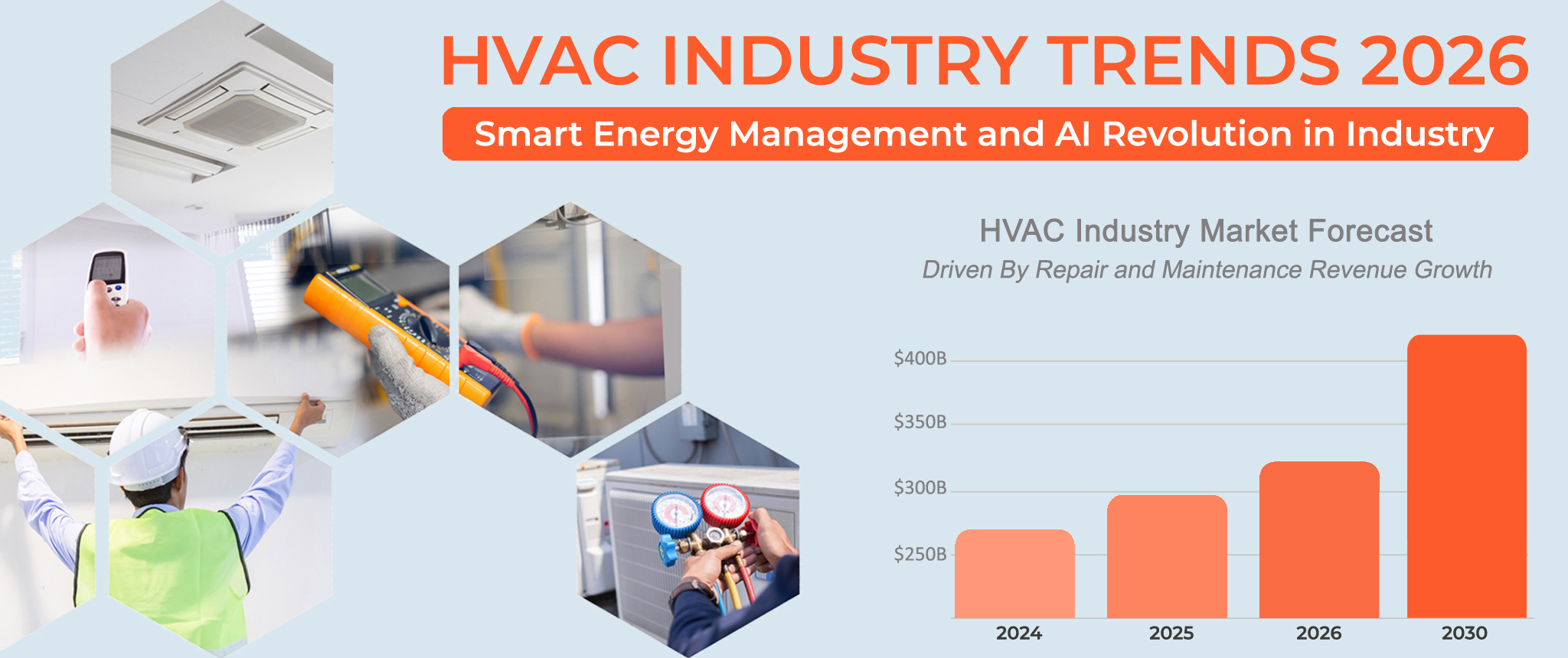
The HVAC industry continues to expand as homeowners and businesses invest in advanced heating, cooling, and ventilation systems. Rising demand for energy-efficient HVAC solutions, a shift toward electrification, smart climate control technologies, and upgraded comfort systems is creating strong momentum across the U.S. market.
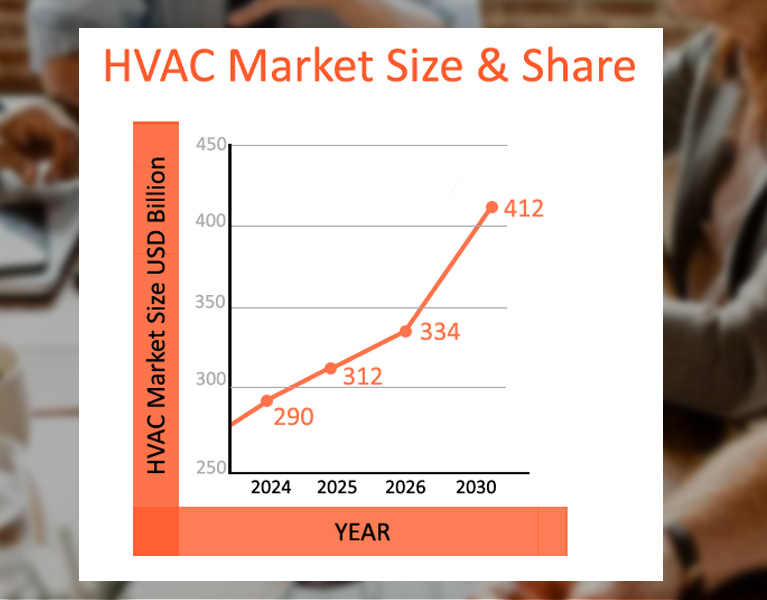
According to the industry research platform, the U.S. HVAC market is expected to grow at a CAGR of more than 6.7% from 2026 to 2030. Since HVAC systems account for a major share of energy consumption, customers are increasingly prioritizing reliable, cost-effective, and high-efficiency heating and cooling services.
Table of Contents
ToggleFor HVAC contractors, staying up to date with industry trends and market data is becoming essential to remain competitive in 2026. Whether operating as an independent technician or managing a large HVAC company, businesses can understand the latest industry benchmarks to adapt to evolving customer expectations and market demands.
1. HVAC Repair & Maintenance Trends
Repair and maintenance services are among the fastest-growing revenue segments in the HVAC industry. In 2026, many HVAC companies are shifting away from heavy reliance on new installations and toward recurring repair services, preventive maintenance, and seasonal tune-ups. This industry-wide transition is reshaping how HVAC contractors build long-term customer relationships and stabilize revenue streams.
According to my dedicated research in HVAC Industry,
CAGR 6.2%
(2026-2030)
USD 115BN
2030 Projected Market Size
USD 225M
Avg Annual Maintenance Plan
32% Industry
Repair Revenue Share
- HVAC repair services analytics increased by 12% between 2022 and 2026, contributing nearly 32% of total industry revenue and reflecting the growing demand for repair-focused services.
- At the same time, the average revenue generated per repair ticket has also increased by 45% between 2022 and 2026, highlighting the growing value of repair-focused service models.
The broader HVAC Maintenance Sector is also seeing strong expansion.
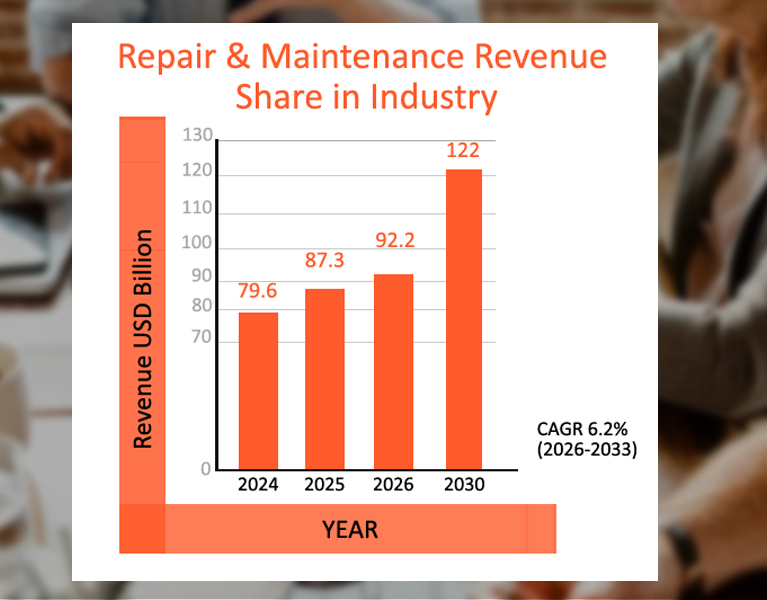
- The global HVAC maintenance services market is projected to grow at a CAGR of 6.2% from 2026 to 2030.
- In addition, the HVAC maintenance & repair service market is estimated at USD 92.2 billion in 2026 and is projected to reach USD 122 billion by 2030.
Another major trend shaping the industry is the rise of HVAC maintenance agreements. The average professional maintenance plan now costs around $225 annually, and more contractors are using recurring service agreements to create predictable cash flow and improve customer retention.
HVAC Repair & Maintenance Service Market Trends
Why HVAC Repair Demand is Increasing?
Rising Replacement Costs
Increasing equipment prices and higher installation expenses are pushing more homeowners and businesses toward HVAC repair services instead of complete system replacements. This trend is driving stronger demand for affordable repair and maintenance solutions.
Growing Focus on Energy Efficiency Regulations
As energy-efficiency regulations and smart HVAC systems become more common, regular maintenance is becoming increasingly important. Modern HVAC systems require ongoing servicing, inspections, and performance optimization to maintain efficiency and reduce energy usage.
Expansion of Preventive Maintenance Programs
Preventive maintenance plans are becoming a standard part of the HVAC business model. More companies are adopting proactive servicing strategies to reduce unexpected breakdowns, extend equipment lifespan, and improve system reliability.
Adoption of Smart Diagnostics & Predictive Maintenance
Advanced diagnostic tools and predictive maintenance technologies are transforming HVAC service operations. These technologies help technicians identify issues earlier, improve repair accuracy, and increase overall service efficiency.
Another emerging trend is the operational advantage of repair-based services. Since repair jobs are generally completed faster than full HVAC installations, contractors are able to handle higher service volumes while improving scheduling efficiency and overall profitability.
2. Refrigerant Transition & Low-GWP HVAC Systems
The transition toward low-GWP refrigerants is becoming one of the biggest HVAC industry trends in 2026. With new EPA regulations accelerating the phaseout of R-410A systems, HVAC manufacturers, contractors, and facility managers are rapidly shifting toward next-generation refrigerants such as R-32 and other environmentally compliant alternatives.
As the availability of older refrigerants continues to decline, many HVAC companies are experiencing rising refrigerant costs, supply limitations, and increased pressure to upgrade aging systems earlier than expected. This industry-wide refrigerant transition is also reshaping service operations, technician training requirements, and long-term equipment planning.
Another major trend emerging in 2026 is the growing need for technicians trained in low-GWP refrigerant handling, smart HVAC systems, and energy-efficient climate technologies. Service teams are increasingly prioritizing refrigerant safety compliance, advanced diagnostics, and system optimization as modern HVAC equipment becomes more technically complex.
According to our experts’ research, demand for skilled HVAC technicians continues to rise as companies compete for professionals with expertise in refrigerant transition standards and smart HVAC integration.
- In 2026, the median annual salary for HVAC technicians is approaching $50,000, while experienced technicians in high-demand markets are consistently earning between $90,000+ annually.
3. Smart Connected Buildings & Automation Systems
In 2026, Smart HVAC technology and connected building systems are becoming a major focus across the HVAC industry and the consumer demand is accelerating.

Growing consumer shift toward Smart, Energy-Efficient & Health-Focused Indoor Solutions driving the:
- Adoption of smart thermostats,
- Indoor air quality (IAQ) systems and monitoring technologies
- Intelligent Energy Management Systems (EMS).
- Building Automation Systems (BAS)
- Climate Controlled HVAC Solutions
- Expansion of net-zero and high-efficiency building construction
According to reports, more than 60% of HVAC customers are now willing to pay a premium for eco-friendly, energy-efficient HVAC systems that reduce carbon emissions and deliver long-term energy savings. This shift in consumer preference is driving rapid growth in smart home climate technologies and the growing importance of connected indoor comfort solutions.
- Current market estimates project approximately $4 billion in smart thermostat sales and nearly $12 billion in IAQ-related sales between 2026 and 2029,
Another major trend shaping the industry is the expansion of net-zero and high-efficiency building construction. New residential and commercial projects are increasingly being designed around energy optimization standards, creating stronger demand for HVAC professionals skilled in airflow balancing, duct sealing, high-efficiency system sizing, and smart climate integration.
Commercial buildings are also rapidly adopting Energy Management Systems (EMS) and Building Automation Systems (BAS) to improve operational efficiency and reduce energy waste.
- As per the market report analytics, air conditioning systems now account for nearly 7% of total electricity consumption in the United States, costing homeowners approximately $30 billion annually.
As energy costs continue rising, businesses are investing more heavily in automated HVAC controls, connected monitoring systems, and intelligent building technologies. The global EMS market is expected to more than double by 2030, reflecting the growing industry shift toward data-driven building performance, predictive maintenance, and energy optimization.
4. AI Revolution in HVAC Operations
Artificial intelligence is rapidly becoming one of the most disruptive HVAC industry trends in 2026. From predictive maintenance and smart diagnostics to automated customer engagement and intelligent scheduling, AI is reshaping how HVAC companies manage operations, service customers, and generate recurring revenue.
AI-powered HVAC diagnostics and predictive maintenance systems
One of the biggest shifts is the growing adoption of AI-powered HVAC diagnostics and predictive maintenance systems. Modern HVAC equipment can now detect performance irregularities, monitor system health in real time, and alert contractors or homeowners before major component failures occur. This trend is helping HVAC businesses improve maintenance efficiency, reduce system downtime, and increase preventive service opportunities.
Predictive Analytics
Another emerging trend is the use of predictive analytics to better understand customer behavior and equipment lifecycle patterns. AI systems can analyze service history, maintenance frequency, system age, and repair records to predict future service needs and identify potential upgrade opportunities. As predictive maintenance technology becomes more advanced, HVAC companies are increasingly moving toward proactive service models instead of reactive repairs.
AI-powered automation
This is also transforming customer communication and lead management across the HVAC sector. Smart chatbots and automated CRM systems are becoming standard tools for handling customer inquiries, scheduling appointments, generating quotes, and qualifying leads in real time. These technologies are helping contractors improve response speed, streamline communication, and create more consistent customer experiences.
Scheduling optimization
is another fast-growing trend within the HVAC industry. AI-driven route planning and automated dispatch systems are improving technician utilization while reducing travel time and operational inefficiencies. This shift toward intelligent workforce management is allowing HVAC companies to complete more service calls with greater efficiency.
Quoting Systems
- The quoting process is also evolving through AI-powered estimation tools. Instant, data-driven quoting systems are helping contractors deliver faster and more accurate estimates, reducing delays in the sales process and improving customer response times.
Operational Cost
- Another noticeable industry trend is the growing use of AI for operational cost reduction. Automation technologies are helping HVAC businesses reduce administrative workloads, streamline repetitive tasks, and improve overall operational efficiency as companies continue adapting to tighter labor markets and rising service demand.
Energy Efficiency Optimization
- AI is also playing a growing role in energy-efficiency optimization. Intelligent HVAC systems can automatically adjust performance settings, monitor energy consumption patterns, and improve climate control efficiency based on real-time environmental conditions. This trend is becoming a stronger selling point for both residential and commercial HVAC projects focused on sustainability and long-term energy savings.
5. Geothermal and Next-generation HVAC equipment
- Advanced HVAC technologies are continuing to gain momentum in 2026 as energy efficiency and sustainable system adoption become major priorities across the industry. Among the fastest-growing trends is the rising adoption of geothermal HVAC systems, particularly in the residential sector.
- According to my industry research, residential geothermal system adoption has increased by nearly 15%, driven by long-term energy savings, rising utility costs, and expanding federal incentive programs.
As homeowners increasingly prioritize environmentally responsible heating and cooling solutions, geothermal systems are becoming a more visible part of the evolving HVAC landscape.
This trend shaping is shaping the market growing demand for Variable Refrigerant Flow (VRF) systems, zoning technologies, and advanced indoor air quality solutions. These modern HVAC systems are helping residential and commercial buildings improve climate control efficiency, personalized comfort, and environmental performance while supporting stricter energy standards.
The industry is also seeing a broader shift toward high-efficiency HVAC designs that combine smart controls, energy optimization, and sustainable operation. As a result, advanced HVAC technologies are becoming a central part of modern building performance strategies in 2026.
6. Heat Pumps, Electrification & High-Efficiency HVAC Systems
Heat pumps continue to emerge as one of the most influential HVAC industry trends in 2026.
Electrification continues to reshape the HVAC industry in 2026, with heat pumps becoming a central part of the transition away from traditional fossil-fuel-based heating systems, having dual heating-cooling functionality, and compatibility with modern sustainability goals. The growing demand for 17 SEER2-compliant systems is also accelerating heat pump adoption.
Federal tax credits, state rebate programs, and energy-efficiency initiatives are accelerating the adoption of electric heating technologies across residential markets. The market is seeing increased interest in updated HVAC efficiency regulations introduced in 2023, where heat pumps are integrated with smart thermostats, zoning systems, and other high-performance climate technologies.
The ongoing phase-down of R-410A refrigerants is also contributing to faster HVAC system replacement cycles and increased adoption of next-generation heat pump technologies.
Another reason shaping the market is the growing emphasis on heat pump expertise and specialized technician training. As advanced heat pump systems become more common, HVAC companies are expanding certification programs and investing in high-efficiency installation capabilities to meet changing consumer demand.
This shift reflects the broader industry movement toward electrified, environmentally compliant, higher-SEER2 systems and energy-optimized HVAC solutions in 2026.
7. AI transforming HVAC marketing
Digital transformation is becoming a major competitive trend across the HVAC industry in 2026. As customer acquisition increasingly shifts online, HVAC companies are adopting AI-powered marketing tools, automated CRM systems, and localized digital advertising strategies to improve lead generation, customer engagement, and conversion efficiency.
One of the fastest-growing trends is the use of generative AI for HVAC content creation and customer engagement and “keyword-to-conversation” marketing strategies across the HVAC industry. Instead of relying only on traditional keyword-focused advertising, HVAC companies are increasingly using AI-powered tools to create more conversational, personalized, while adapting to evolving search behavior focused on natural, conversation-based customer queries instead of traditional keyword-only searches. AI tools are now helping HVAC businesses produce blog content, email campaigns, social media posts, ad copy, and customer communication at scale while maintaining consistent brand messaging.
Another major shift in the industry is the growing role of AI-driven lead qualification and predictive targeting. Automated advertising platforms, AI-powered chatbots, and predictive customer behavior analysis are helping HVAC companies identify higher-intent leads and improve conversion opportunities. These systems analyze customer patterns, service demand, and engagement behavior to support more targeted and data-driven marketing strategies.
AI-integrated search is also reshaping HVAC customer acquisition trends. With the rise of AI-powered search experiences, local-intent SEO, and optimized Google Business Profiles, HVAC companies are placing greater focus on visibility within localized search results. This trend is making HVAC SEO and digital presence more important than ever for attracting new residential and commercial customers.
Another noticeable trend in 2026 is the growing emphasis on faster lead response systems. HVAC companies are increasingly using CRM platforms with automated texts, calls, and instant follow-up tools to improve customer response times and reduce lead loss during peak demand periods. According to my dedicated research in HVAC industry,
- The average HVAC marketing cost per lead (CPL) now ranges between $70 and $150, while highly competitive markets can exceed $250 per lead.
- As a result, many successful HVAC businesses are reinvesting approximately 8% to 12% of total revenue into marketing and customer acquisition strategies.
- Digital advertising platforms also continue to influence HVAC industry trends. Google Ads remain highly effective for emergency HVAC services and high-intent search traffic, while Facebook and Instagram advertising are increasingly used for residential system replacements, financing promotions, and high-ticket HVAC installations.
This approach not only boosts engagement but also positions your business as a go-to authority in your local market. This YouTube channel is a great example of video marketing, featuring repair tutorials and step-by-step service guides.
What These HVAC Industry Trends Mean for Contractors?
The HVAC industry in 2026 is evolving rapidly, and contractors that adapt to these market shifts will be better positioned to stay competitive. From repair-driven revenue models and electrification to AI-powered operations and smart HVAC technologies, the industry is moving toward more service-focused, technology-driven business strategies.
One of the biggest long-term shifts is the growing importance of HVAC repair and maintenance services. According to my industry research, average repair volume has increased from 103 service calls per organization in 2022 to more than 170 calls in 2025, highlighting the industry’s transition toward recurring repair demand rather than relying solely on new system installations.
While HVAC installations still represent high-ticket revenue opportunities, repair services are becoming a larger and more consistent contributor to overall business performance. As a result, many HVAC companies are restructuring operations to support higher service demand, improve technician efficiency, and strengthen long-term customer retention.
Another major trend is the increasing reliance on digital systems, automation, and AI-powered business tools. HVAC contractors are adopting smarter scheduling platforms, automated dispatch systems, CRM integrations, and predictive customer management tools to improve operational efficiency and customer response times.
At the same time, HVAC digital marketing is becoming a critical driver of lead generation and local visibility. More companies are investing in SEO-optimized repair service pages, Google Business Profile optimization, localized landing pages, educational HVAC content, and AI-driven marketing strategies to attract high-intent repair and maintenance leads.
Modern HVAC marketing trends are also shifting toward trust-focused and location-based content strategies. Service companies are increasingly using technician videos, customer testimonials, before-and-after project visuals, and localized advertising campaigns to strengthen brand credibility and improve conversion rates.
I am Chan K, Digital Marketing Specialist of Home Services Marketing Agency, helping HVAC contractors adapt to changing industry trends through advanced HVAC marketing strategies, AI-powered customer acquisition systems, local SEO, and high-converting lead generation campaigns designed for modern HVAC businesses.
We are Your Trusted Digital Marketing Agency
Home services owners often want to know a transparent view of the real results digital marketing can bring them. We are a trusted digital marketing agency, defining realistic expectations and achieving measurable outcomes.
As the HVAC market becomes more competitive and technology-driven, contractors are focusing on:
- Improving scheduling and dispatch workflows
- Increasing technician productivity
- Strengthening pricing and quoting systems
- Implementing scalable CRM and automation platforms
- Expanding Repair-focused marketing strategies by creating SEO-optimized AC repair, furnace repair, and emergency HVAC service pages targeting high-intent local search keywords.
- Leveraging AI and customer data for smarter business decisions
The future of the HVAC industry is increasingly centred around efficiency, recurring service revenue, advanced technology adoption, and customer experience optimization. Contractors who align their operations, marketing, and service strategies with these evolving trends will be better prepared to grow and remain competitive in the years ahead.
Home Services Marketing
Maximize Growth. Dominate Your Market. Delivering Impact Worldwide
Ready to consult with our marketing expert?
Solutions
Industries
About Us
Helping Home Services Companies Stand Out in Local Market, Attract High Quality Leads, and Drive Real Business Growth.
Have Any Questions? support@homeservices.marketing